
NEXTMAKE INTERNSHIP LAB
Global young talent for
your next project
An internship development lab led by Japanese project managers and built with talented overseas university students
We form teams of two or three students, primarily graduates of Japanese IT Pathway. A Japanese PM manages requirements, delivery and quality so your project moves forward in Japanese.
- 01Led by a Japanese PM
- 02Two-to-three-person student team
- 03Project delivery in Japanese
- 04Japanese IT Pathway graduates

Talent around the world becomes valuable when people meet. We begin by growing that connection together.
CHALLENGES IN JAPAN
Move Japan's talent shortage
forward
A focused project team fills practical resource gaps that hiring alone cannot quickly solve.

SES rates continue to rise
No team for overseas expansion
Limited English capability
Not enough resources for new business
FOR JAPANESE SYSTEM COMPANIES
Move the challenge ahead with a Lab team.
We design a team around the practical work your project needs across development, research, testing and overseas expansion.READY FOR A REAL PROJECT
Learning becomes
real project work
Our teams are centered on students trained through Japanese IT Pathway. NEXTMAKE supports the full journey from education to creating value inside a company project.
Explore Japanese IT PathwayJapanese
Students learn to report, consult and communicate with a project team in Japanese.
IT
Students develop practical skills in development, testing, AI and design.
Japanese business culture
Students learn deadlines, reporting, quality and how Japanese teams work together.
PROJECT TEAM MODEL
Your company, NEXTMAKE and students
become one project team
A Japanese PM is your single point of contact, translating goals into requirements, tasks, progress reviews and quality controls for the student team.
Japanese company
Shares business goals, context and decision criteria
NEXTMAKE
Designs the engagement and supports the entire project
Japanese PM
Manages requirements, tasks, delivery and quality
Student Team
Two or three students divide roles and execute
- Developer
- Designer
- Research
- Translator
- Tester
- AI Support
USE CASES
Move resource-intensive work
with a focused team
Start with a clearly scoped task. A Japanese PM and student team agree on the purpose and output, then work continuously toward delivery.

SYSTEM DEVELOPMENT
System development
- Testing and verification
- Coding
- AI development support
- Documentation
- Data and specification organization

GLOBAL EXPANSION
Overseas expansion
- English translation
- Market research
- Social media operations
- Local research
- Sales-material translation

AI UTILIZATION
AI utilization
- Data organization
- AI training-data creation
- Image generation
- Video editing
- Article writing
HOW WE WORK
Start with a focused project
We define the goal, owners, output and review process up front, then keep progress visible in Japanese throughout the engagement.
-
01
Discuss the challenge
Share work that consumes time or a new theme you want to move forward.
-
02
Define the scope
Clarify the first scope, schedule, output and review method.
-
03
Form the team
Match two or three students and a Japanese PM to the project.
-
04
Kick off in Japanese
Align the background, goal, roles and ways of working.
-
05
Execute and review
The Japanese PM checks progress, output and quality and reports in Japanese.
-
06
Deliver and expand
Review outcomes and consider continued work, a larger scope or recruitment.
OUR PURPOSE
Education should lead somewhere
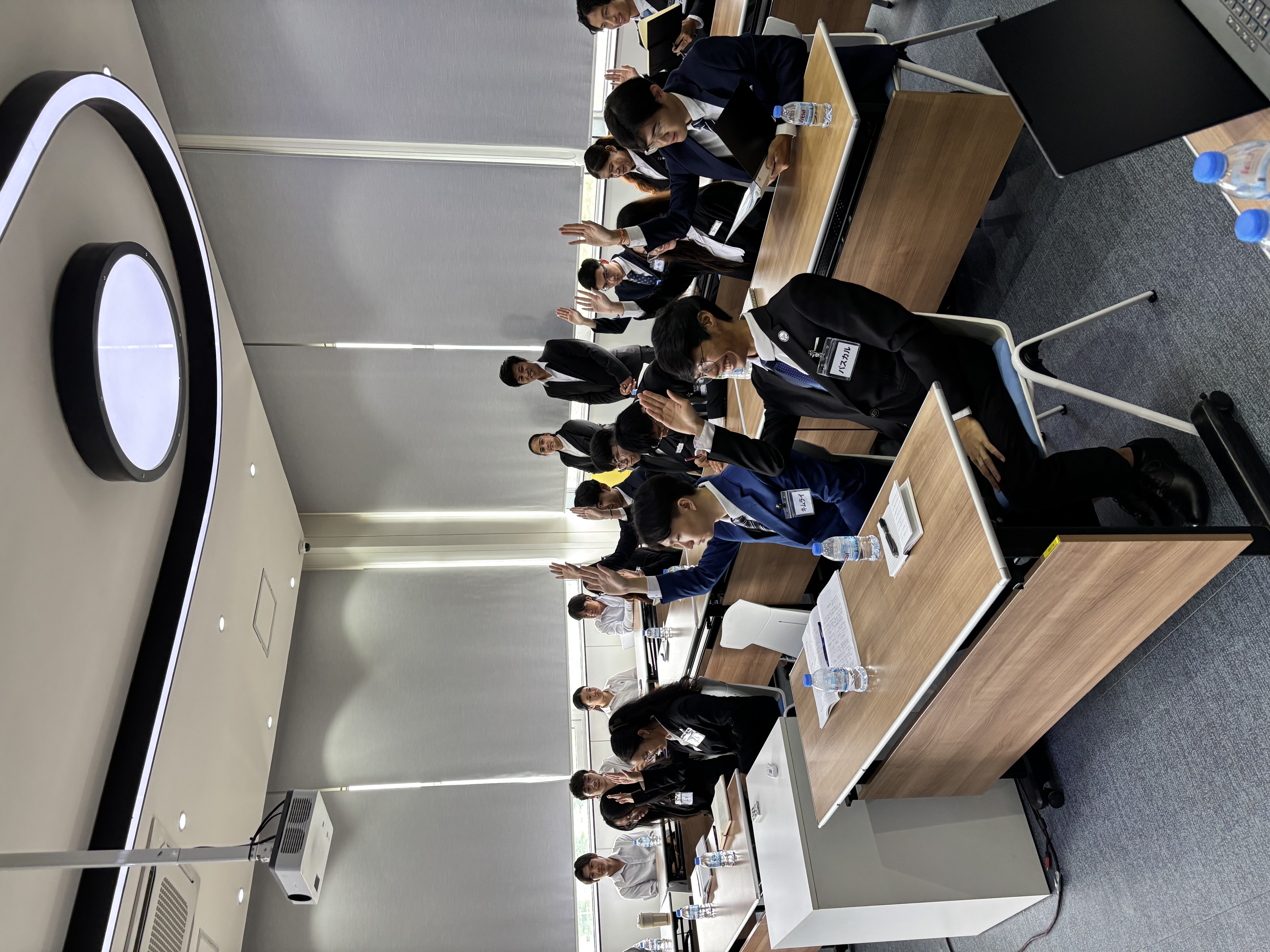
NEXTMAKE does more than educate students. We create global opportunities for young people while helping solve the talent shortage faced by Japanese companies.
Students learn through real work, while companies gain new capacity. The system is designed so both sides grow.
Students learn through practice
×
Companies gain new capability
That is NEXTMAKE Internship Lab.
JAPANESE IT PATHWAY
Connect learning
to company projects
Japanese IT Pathway develops Japanese, IT and Japanese business-culture skills. Internship Lab connects that learning with real projects, careers and ongoing collaboration.
Explore Japanese IT Pathway
- 01 Japanese and IT education
- 02 Exchange with Japanese companies
- 03 Practice in Internship Lab
- 04 Careers and ongoing projects
PROJECT BASED COST
Build the team the project needs,
not simply one seat.
Move from securing one person through conventional SES to a project-based team where a Japanese PM and two or three students divide the work.
JPY 600k–800k per person / month
A conventional model that secures one person's monthly capacity
Target 40–60% cost reduction
A project-based team of one Japanese PM and two or three students
- Delivery managed by a Japanese PM
- Roles shared by two or three students
- Scope and schedule designed per project
The comparison uses typical SES rates in Japan for illustration. Actual savings vary by scope, duration and team structure. We provide an individual estimate after reviewing the project.
FAQ
Frequently asked questions
You can speak with us before the project scope or ideal team structure is clear.
Q01How do you evaluate student skills?
We review progress in Japanese IT Pathway, academic focus, Japanese and English communication, and project assignments, then match students to the work.
Q02Can the project run entirely in Japanese?
Yes. A Japanese PM serves as your contact and handles requirements, progress updates and output reviews in Japanese.
Q03Can we start with a small task?
Yes. We can begin with testing, data organization, research or documentation where scope and output are easy to define.
Q04How do you manage information and source code?
We define access, tools, data handling and review procedures for each project. Sensitive information is assessed separately.
Q05How are contracts and intellectual property handled?
Deliverables, IP, confidentiality and permitted use are clarified in the agreement before work begins.
Q06What is the minimum project duration?
It depends on the work. We first organize the target and propose a practical validation period and team structure.
START WITH ONE PROJECT
Tell us one task
that is taking too much time
NEXTMAKE will organize the work and propose a first project for a Japanese PM and a team of two or three students.